

Blogs
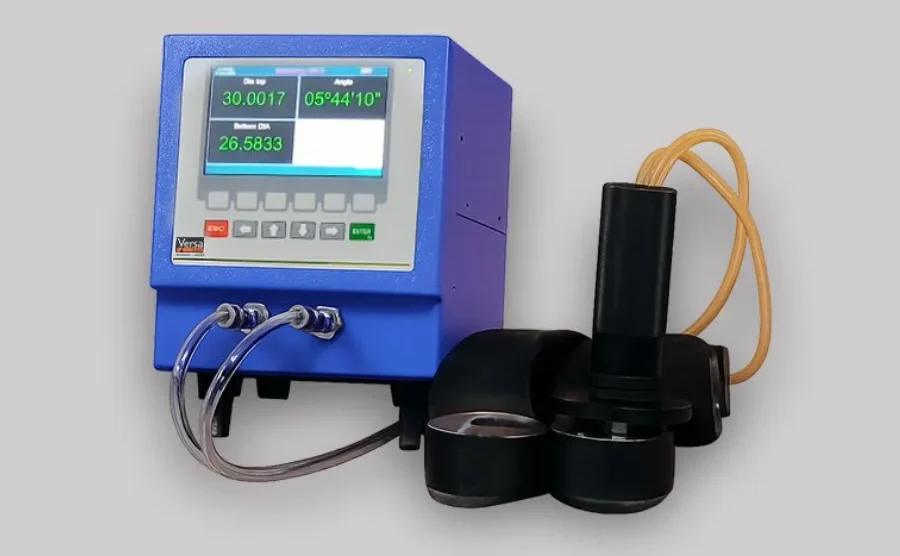
Taper Measurement: Methods, Tools, and Best Practices for Precision Engineering
In precision engineering and manufacturing, even the smallest dimensional variation can impact performance, safety, and product life. One such critical parameter is taper measurement. Whether it’s a spindle, shaft, tool holder, or conical component, accurate taper measurement ensures proper fit, alignment, and load distribution.
At Versa Controls, we understand that taper accuracy is not just a quality requirement—it’s a performance guarantee. In this blog, we’ll explore what taper measurement is, why it matters, common measurement methods, tools used, and best practices followed in modern manufacturing environments.
What Is Taper Measurement?
A taper is a gradual change in diameter along the length of a cylindrical or conical component. Taper measurement refers to the process of determining the taper angle, taper ratio, or dimensional accuracy of such components.
Tapers are widely used in:
Machine tool spindles
Shafts and bushes
Tool holders (Morse taper, ISO taper, BT taper)
Automotive and aerospace components
Precision assemblies requiring self-locking fits
Accurate taper measurement ensures that mating parts fit perfectly, reducing vibration, wear, and misalignment.
Why Is Taper Measurement Important?
Incorrect taper dimensions can lead to serious manufacturing and operational issues. Here’s why taper measurement is critical:
Ensures proper assembly fit between mating components
Prevents tool slippage in machine spindles
Improves load distribution, reducing premature failure
Enhances machining accuracy and surface finish
Maintains compliance with international quality standards
At Versa Controls, taper measurement is a key part of our precision inspection and quality assurance process, ensuring every component meets exact specifications.
Types of Taper Measurement
External Taper Measurement
Used for shafts, pins, and external conical surfaces. The outer diameter changes along the length and must be measured accurately to ensure correct mating.
Internal Taper Measurement
Common in machine tool spindles and sockets where tools or shafts are inserted. Internal taper accuracy is crucial for alignment and torque transmission.
Common Taper Measurement Methods
Taper Angle Measurement
This method determines the angle between the taper surface and the component’s axis. It is one of the most direct ways to evaluate taper geometry.
Two-Diameter Method
In this method, diameters are measured at two known distances along the taper length. The taper angle or ratio is calculated using a formula.
Sine Bar Method
A sine bar combined with slip gauges is used for high-precision taper measurement. This method is commonly applied in inspection labs.
Dial Gauge Method
Dial indicators are used to measure runout and taper deviation when the component is rotated between centers.
Coordinate Measuring Machine (CMM)
CMMs provide highly accurate and repeatable taper measurement, especially for complex or tight-tolerance components. This method is ideal for modern quality control environments.
Taper Measurement Tools and Instruments
Accurate results depend heavily on the right tools. Some commonly used taper measurement instruments include:
Taper Gauges – Quick and effective for shop-floor checks
Dial Gauges – Used with fixtures for comparative measurement
Micrometers & Vernier Calipers – For basic diameter measurements
Sine Bars & Slip Gauges – High-precision inspection tools
CMM Machines – Advanced digital measurement solutions
At Versa Controls, we leverage reliable and calibrated measurement systems to ensure consistent accuracy across every inspection stage.
Best Practices for Accurate Taper Measurement
To achieve reliable and repeatable results, follow these best practices:
Ensure proper calibration of measuring instruments
Maintain a clean measurement environment to avoid dust or oil interference
Measure at multiple points along the taper length
Use stable fixturing to avoid alignment errors
Follow standard measurement procedures consistently
Precision is not accidental—it’s the result of disciplined processes and expertise.
Taper Measurement in Modern Manufacturing
With the rise of CNC machining and automated production, taper measurement has evolved significantly. Digital measurement systems and CMMs now allow manufacturers to detect minute deviations and correct them before mass production.
For industries such as aerospace, automotive, and heavy engineering, taper measurement plays a vital role in maintaining safety, reliability, and performance.
At Versa Controls, we integrate advanced metrology practices with real-world manufacturing knowledge, helping our clients achieve uncompromised precision.
Why Choose Versa Controls for Precision Measurement Solutions?
Versa Controls is committed to delivering accurate, reliable, and industry-compliant measurement solutions. Our approach is built on:
Deep understanding of precision engineering requirements
Use of advanced taper measurement methods
Strict adherence to quality and calibration standards
A customer-first mindset focused on long-term performance
We believe that when measurements are right, everything else falls into place.
Taper measurement is a critical aspect of precision manufacturing that directly impacts performance, safety, and product quality. From simple taper gauges to advanced CMM systems, selecting the right method and following best practices ensures reliable results.
With expertise, accuracy, and attention to detail, Versa Controls stands as a trusted partner for precision measurement and quality assurance. When precision matters, measuring it right makes all the difference.
Frequently Asked Questions
What is taper in mechanical engineering?
A taper in mechanical engineering is a gradual change in the diameter of a component along its length. Tapers are commonly used in shafts, tool holders, spindles, and precision assemblies to improve alignment, ensure secure fitting, and facilitate efficient load transfer between mating parts.
Which taper measurement method is the most accurate?
Coordinate Measuring Machine (CMM) inspection is considered the most accurate taper measurement method. It captures multiple measurement points across a tapered surface, providing highly precise and repeatable results for applications requiring tight tolerances and advanced quality control.
What is a taper measurement gauge and how does it work?
A taper measurement gauge is a precision tool used to verify the dimensional accuracy of tapered surfaces. It works by checking whether a component’s taper matches specified dimensions and tolerances, making it ideal for fast and reliable inspection in manufacturing environments.
What factors affect taper measurement accuracy?
Taper measurement accuracy can be affected by instrument calibration, component alignment, temperature changes, surface contamination, and improper fixturing. Using calibrated tools and following standardized inspection procedures helps ensure accurate and repeatable measurement results.
How does taper measurement improve manufacturing quality?
Taper measurement improves manufacturing quality by ensuring proper component fit, reducing assembly errors, minimizing wear, and improving machining accuracy. Accurate taper inspection helps manufacturers maintain product consistency, meet engineering specifications, and reduce costly rework.