Blogs
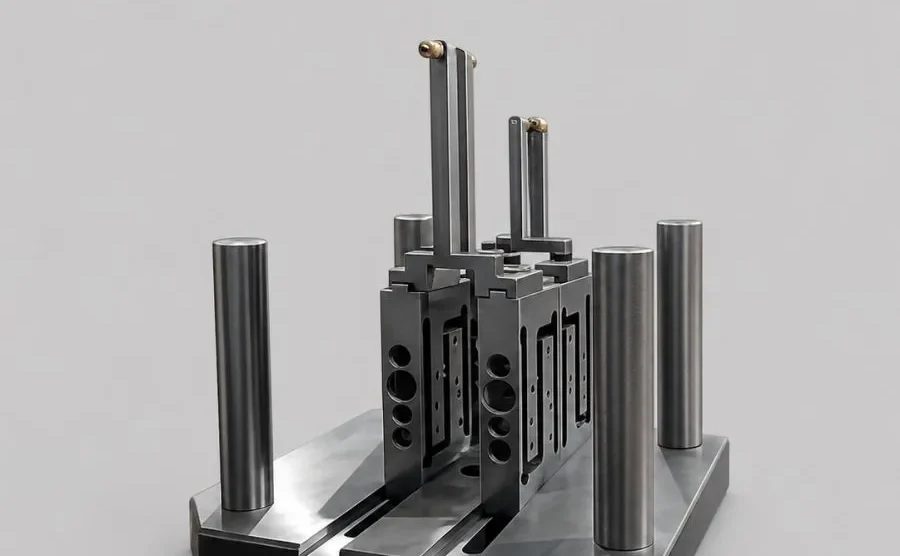
Flexure Technology: The Future of Precision Engineering and Motion Control
In the world of high-precision engineering, where accuracy, repeatability, and reliability matter more than anything else, flexure technology has emerged as a game-changer. From semiconductor equipment and optical systems to automation and metrology, flexure mechanisms are redefining how motion is achieved—without friction, backlash, or wear.
If you’re looking to understand what a flexure is, how flexure design works, and why choosing the right flexure manufacturer company is critical, this guide will walk you through everything you need to know.
What Is a Flexure?
A flexure is a mechanical element that allows controlled motion through elastic deformation rather than traditional moving parts like bearings or joints. Unlike conventional mechanisms, flexures rely on material flexibility to create precise, smooth, and repeatable movement.
This simple yet powerful concept makes flexures ideal for applications where even microscopic errors are unacceptable.
Key characteristics of flexures include:
Zero friction motion
No backlash
No lubrication required
Extremely high precision and repeatability
Understanding Flexure Mechanisms
A flexure mechanism is a compliant system that transfers motion, force, or energy by bending rather than sliding or rolling. These mechanisms are widely used in precision engineering because they eliminate common mechanical issues such as wear, vibration, and alignment errors.
Why Flexure Mechanisms Are Superior
Traditional mechanical systems depend on multiple components working together, increasing failure points. Flexure mechanisms simplify motion systems by reducing part count and improving reliability.
Benefits of flexure mechanisms:
Long service life
Maintenance-free operation
High stiffness and accuracy
Excellent performance in cleanroom environments
The Importance of Flexure Design
Flexure design is both an art and a science. A well-designed flexure must balance flexibility and stiffness while staying within material stress limits. Poor design can lead to fatigue failure, reduced accuracy, or limited motion range.
Key Factors in Flexure Design
Material selection: Stainless steel, titanium, aluminum alloys
Geometry optimization: Thickness, length, and curvature
Load conditions: Static and dynamic forces
Motion requirements: Linear, rotary, or complex motion paths
Modern flexure design often involves advanced simulation tools like finite element analysis (FEA) to predict performance and ensure reliability before manufacturing.
What Makes Flexure Technology So Powerful?
Flexure technology enables motion without contact, making it ideal for ultra-precision applications. It has become essential in industries where traditional bearings simply cannot meet performance demands.
Applications of Flexure Technology
Semiconductor manufacturing equipment
Optical alignment and imaging systems
Precision automation and robotics
Metrology and inspection systems
Aerospace and research instruments
Because flexures don’t require lubrication, they are perfect for vacuum environments, cleanrooms, and sensitive optical systems.
Why Choose a Specialized Flexure Manufacturer Company?
Not all flexures are the same. The performance of a flexure depends heavily on design expertise and manufacturing precision. Partnering with an experienced flexure manufacturer company ensures that your components meet exact performance specifications.
What a Reliable Flexure Manufacturer Company Offers
Custom flexure design support
High-precision machining and fabrication
Material expertise for demanding applications
Consistent quality and tight tolerances
Testing and validation support
A trusted flexure manufacturer doesn’t just deliver a product—they deliver confidence, reliability, and long-term performance.
Custom Flexures vs Standard Flexures
While standard flexures work for basic applications, most high-precision systems require custom flexures tailored to specific motion, load, and environmental requirements.
Advantages of Custom Flexure Solutions
Optimized performance for your application
Better system integration
Reduced assembly complexity
Improved accuracy and lifespan
An experienced flexure manufacturer company will collaborate closely with engineers to ensure the final design meets real-world operating conditions.
The Future of Flexure Technology
As industries move toward miniaturization, automation, and higher accuracy, flexure technology will continue to grow in importance. Emerging fields such as nanotechnology, photonics, and advanced robotics are already driving demand for innovative flexure designs.
With advancements in materials, simulation tools, and precision manufacturing, flexures are becoming lighter, stronger, and more capable than ever before.
A flexure may seem simple at first glance, but its impact on precision engineering is profound. From carefully engineered flexure mechanisms to advanced flexure design and manufacturing excellence, this technology offers unmatched performance where accuracy matters most.
Choosing the right flexure manufacturer company ensures you don’t just get a component—you get a precision solution built for reliability, performance, and long-term success.
If your application demands smooth, accurate, and maintenance-free motion, flexure technology isn’t just an option—it’s the smart choice.