
Blogs
Air Gauging Solutions: Precision Measurement for Modern Manufacturing
Introduction to Air Gauging
In today’s competitive manufacturing environment, precision measurement is the backbone of quality assurance. One of the most reliable and non-contact measurement methods available is air gauging. This technology uses a stream of compressed air to measure dimensions with extreme accuracy, making it a preferred choice in industries like automotive, aerospace, and precision engineering. From air gauges to advanced air gauging solutions, this method ensures that every component meets exact specifications without causing wear or damage to the part.
What is Air Gauging?
Air gauging is a dimensional measurement technique that uses the principles of airflow and back pressure to determine the size of a part. When compressed air flows through a nozzle and comes into proximity with a surface, the air’s back pressure changes. This change is directly related to the distance between the nozzle and the surface, allowing precise measurements without physical contact.
Key Advantages:
Non-contact measurement – Prevents surface damage.
High repeatability – Consistent accuracy for critical tolerances.
Fast and efficient – Ideal for high-volume production.
Suitable for delicate parts – Especially important for fragile or finished surfaces.
Air Gauging Solutions in Modern Industries
With advancements in manufacturing, air gauging solutions have evolved to provide more than just dimensional measurement. Today, they offer:
Inline inspection for automated processes.
Portable air gauge units for on-site checks.
Custom-designed nozzles for specific part geometries.
Integration with digital data systems for quality tracking.
These solutions are adaptable, making them suitable for both small workshops and large-scale industrial setups.
Understanding Air Gauges
Air gauges are the primary tools in this measurement system. They typically consist of a master setting ring, a gauging head with nozzles, and a readout device. The compressed air passes through the gauging head, and any change in distance between the nozzle and the part alters the back pressure.
Common Air Gauge Applications:
Measuring internal diameters (ID) of cylinders.
Checking flatness and parallelism.
Determining depth and groove widths.
Inspecting bearing bores and precision holes
Air Gauge Units – The Heart of the System
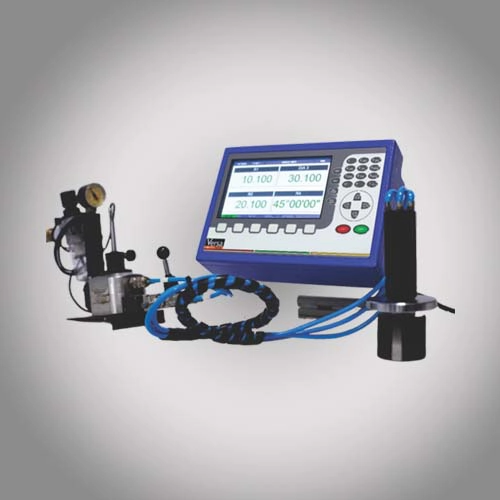
An air gauge unit is the central device that processes the back pressure readings and converts them into precise measurement values. Modern units are often digital, offering:
High-resolution displays.
Multiple measurement modes.
Data output for SPC (Statistical Process Control).
Calibration functions for consistent results.
Without a reliable air gauge unit, the precision of the system could be compromised, making it a critical component in any air gauging setup.
Air Gauge for ID Measurement
One of the most common uses of air gauging is ID (Internal Diameter) measurement. When you need to measure the inside of a bore, cylinder, or tube, an air gauge for ID measurement offers unmatched accuracy.
Benefits of Air Gauging for ID Measurement:
Consistent accuracy even in high-volume production.
No damage to the internal surface.
Quick measurement cycles for faster inspection times.
Ability to detect taper, ovality, and out-of-roundness.
This makes it a go-to solution for industries like automotive engine manufacturing, where precise bore sizes are essential for performance.
Why Choose Air Gauging Over Other Methods?
While other measurement tools like calipers and micrometers have their place, air gauging offers:
Higher accuracy for tight tolerances.
Better speed in repetitive measurements.
Minimal skill requirement for operators.
Integration capability with automated inspection lines.
When quality and speed are both critical, air gauging solutions provide the best balance.
Maintenance and Calibration Tips
To ensure long-term accuracy, follow these tips:
Regular calibration using master rings or gauges.
Clean air supplies to avoid nozzle blockages.
Routine inspection for wear and tear on nozzles.
Software updates for digital air gauge units.
Proper maintenance ensures that your air gauges and air gauge units continue to deliver precise results.